
Sustainable filler materials have moved from industry terminology to a global business requirement. Companies across packaging, plastics, rubber, silicone, and coatings now treat fillers as strategic tools that influence environmental impact, cost, and product performance. As worldwide shipping volumes climb and sustainability standards tighten, the call for responsible filler systems, including sustainable void fill, is stronger than ever.
This article examines the evolution of sustainable filler materials across packaging and industrial applications, the science behind their environmental claims, and the standards that define them. It also explores how businesses can integrate eco-friendly packaging filler and low-emission internal fillers into a unified sustainability strategy.
What Are Sustainable Filler Materials?
Filler materials serve a simple purpose: they occupy space or modify the performance of a material. In packaging, void fillers protect products by reducing empty spaces inside a box. In manufacturing sectors such as plastics or rubber, fillers adjust the weight, viscosity, density, cost, or reinforcement properties. Sustainable filler materials achieve these same functions while lowering environmental impact through reduced emissions, renewable content, or improved end-of-life recovery.
These fillers appear in everything from paper packaging fillers to advanced organic fillers used in plastic and rubber compounds. The shift toward sustainability is driven by policy pressure, rising material costs, and consumer preference for responsible packaging and products.
Why Sustainable Filler Materials Matter Globally
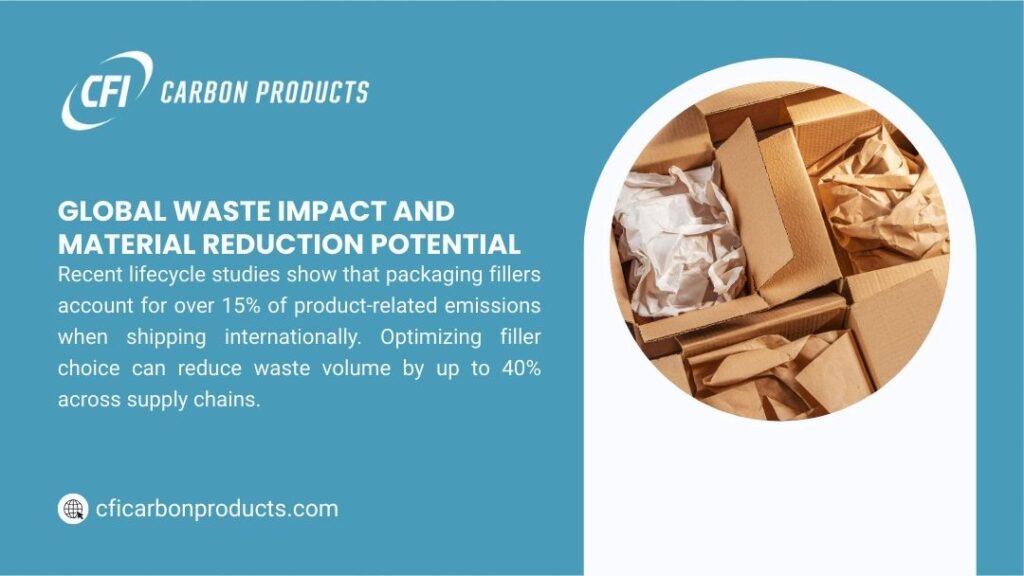
E-commerce has transformed packaging demand. The World Bank reports that global municipal waste is set to grow by 70% by 2050, with packaging waste as one of the largest contributors. Traditional fillers such as plastic bubble wrap, air pillows, and foam peanuts contribute to this waste stream because they depend on fossil-based polymers and have low recycling rates. Paper-based materials, molded fibers, and bio-sourced fillers offer a measurable reduction in environmental impact, both in carbon footprint and end-of-life management.
At the same time, manufacturers in plastics and rubber face their own sustainability pressures. Conventional carbon black and mineral fillers are energy-intensive, prompting a shift toward lower-emission options supported by lifecycle analysis and renewable sourcing.
Understanding Void Fill: The Material That Shapes Protection and Presentation
What Is Void Fill and What Is Void Fill Packaging?
Void fill refers to materials inserted inside a package to remove empty spaces and stabilize products during shipping. Packaging void fill protects fragile items, prevents abrasion, and improves the unboxing experience by keeping multiple items neatly arranged. Whether made from paper, starch, pulp, or bio-based foams, void fillers serve as both a protective tool and a brand signal.
The Functions of Void Fill Beyond Protection
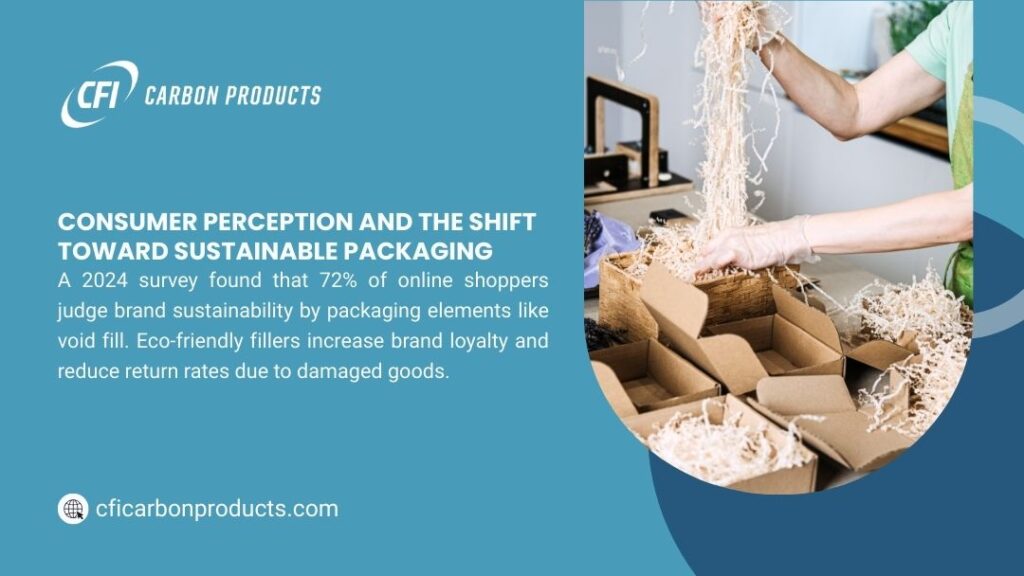
Void fill regulates shipping damage rates, controls dimensional weight, and influences how customers perceive a brand. A clean paper void fill system creates an orderly presentation, while excess plastic filler can undermine sustainable packaging claims. Businesses now view void fill as a branding, sustainability, and logistics decision rather than an afterthought.
Conventional Void Fill and Its Environmental Impact
Plastic bubble wrap and air pillows became widespread because they provide strong cushioning at a low cost. Yet their environmental drawbacks, petroleum sourcing, low recycling participation, and long decomposition periods make them inconsistent with global sustainability goals.
Foam peanuts present similar challenges. Even when labeled recyclable, many facilities cannot process them, leading to landfill accumulation. Traditional crinkle paper and tissue paper are more sustainable, but virgin fiber and non-recyclable coatings reduce their environmental advantage.
The environmental cost of these legacy fillers opens the door to sustainable void fill options with stronger performance and credible environmental credentials.
Modern Sustainable Void Fill Solutions
Paper Void Fill and Void Fill Paper Packaging
Paper void fill remains the most widely adopted sustainable void fill system. Its recyclability, strength, and consumer acceptance make it a reliable eco-friendly alternative to plastic air pillows. Many brands now use sustainably sourced void fill paper with recycled fiber content. Branded tissue paper and reinforced honeycomb paper offer additional aesthetic and protective value.
Shredded Cardboard, Molded Pulp, and Paper Packaging Filler
Repurposed cardboard waste can be turned into packaging filler paper in closed-loop warehouse operations. Molded pulp trays, made from recycled paper or agricultural fibers, support fragile items and multiple items during shipment. These solutions work especially well for companies seeking alternatives to crinkled paper and foam inserts.
Biodegradable Package Filling and Sustainable Loose Fill
Starch-based peanuts and plant-derived foams decompose in composting environments and avoid the disposal challenges of plastic peanuts. Their cushioning performance suits lightweight consumer goods, subscription boxes, and global shipping operations that prioritize eco-friendly void fill packaging.
Innovative Void Fill Options
Newer market developments include mushroom-based inserts, agricultural-fiber panels, and reusable textile cushions for B2B shipments. These options demonstrate how voidfill systems are evolving beyond simple paper or plastic, offering scalable possibilities for different protection levels and environmental requirements.
How To Select the Right Sustainable Filler Material
Selecting the right sustainable filler material requires comparing protection needs, operational realities, and the expectations surrounding unboxing and brand perception. The table below summarizes the key factors that guide this decision across different product categories and packaging environments.
| Criteria | Light, Low-Risk Items | Fragile or High-Value Items | High-Volume Operations | Sustainability Considerations |
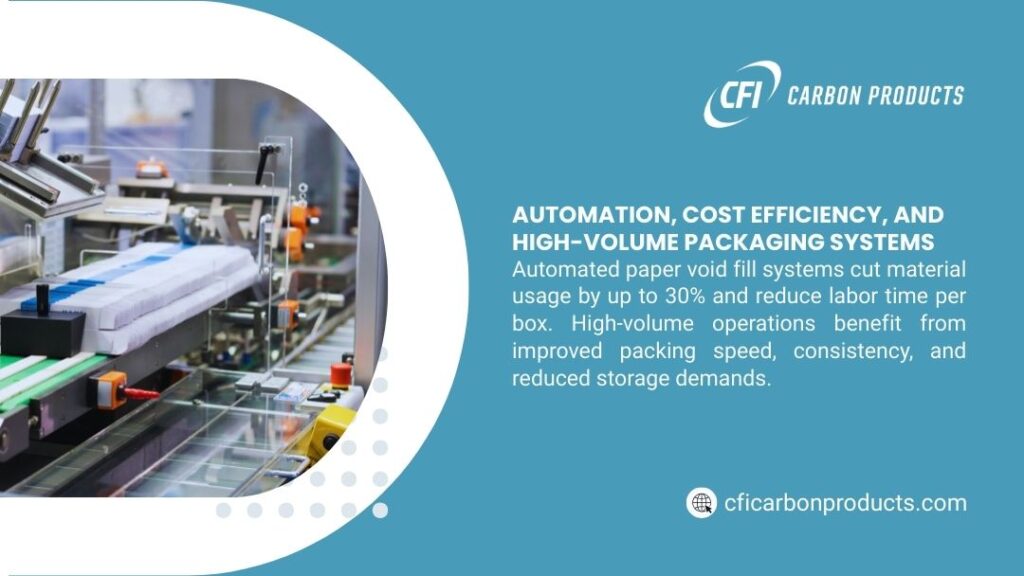
| Recommended Filler | Paper void fill, tissue alternatives, light paper pads | Molded pulp, dense paper cushions, bio-based foams | Automated paper pad systems, on-demand machines, and optimized paper formats | Recycled fiber content, compostability, reduced plastic use, certified sourcing |
| Protection Performance | Moderate cushioning for stable shapes | High-impact absorption for fragile surfaces | Consistent material output and repeatable protection | Minimizing waste while maintaining necessary protection |
| Cost Implications | Low material cost and minimal storage | Higher cost offset by damage reduction | Lower labor costs and predictable material usage | Lifecycle cost savings through better waste outcomes |
| Storage & Workflow | Easy to store and handle | Requires more storage or machine-fed materials | Space-efficient machines producing filler as needed | Reduced storage of plastic-based materials |
| Customer Perception | Clean, minimalist unboxing | Premium, structured presentation | Uniform presentation across shipments | Reinforces eco-friendly packaging commitments |
This comparison helps packaging teams match filler materials to product requirements while maintaining sustainability goals and operational efficiency.
Comparison of Common Void Fill Types by Sustainability and Function
| Void Fill Material | Protection Level | Sustainability Profile | Best Use Cases |
| Plastic bubble wrap | High | Low recyclability, petroleum-based | Heavy, fragile goods |
| Air pillows | Medium | Limited recyclability | E-commerce parcels |
| Plastic foam peanuts | Medium | Poor end-of-life outcome | Bulk fragile items |
| Paper void fill | Medium-High | Widely recyclable; renewable source | Apparel, accessories |
| Shredded cardboard | Medium | Closed-loop reuse | Warehouse operations |
| Molded pulp | High | Recycled content; compostable | Electronics, glass |
| Starch peanuts | Medium | Biodegradable | Lightweight consumer goods |
| Mushroom packaging | High | Compostable | Fragile, premium items |
Measuring Sustainability: Standards, Testing, and ASTM D6866
Why Standards Matter
As brands increase sustainability claims, verification becomes essential. Independent certifications help distinguish genuine eco-friendly packaging filler from unverified marketing language. Standards also guide procurement teams evaluating suppliers, materials, and environmental impact.
ASTM D6866 and Biobased Content
ASTM D6866 determines biobased content through carbon-14 analysis. Materials with higher biobased percentages confirm renewable origin rather than petroleum sourcing. This standard applies to packaging void fill, molded fibers, and industrial filler systems. Verified biobased content allows companies to meet regulatory requirements in regions that reward renewable materials.
Life-Cycle Thinking and Environmental Impact
Life-cycle assessment (LCA) quantifies emissions, energy use, and end-of-life outcomes. Studies examining natural fiber fillers, including those produced from agricultural byproducts, consistently show that these renewable materials deliver a markedly lower carbon footprint compared with conventional mineral fillers, making them a viable pathway for reducing emissions in modern composite and polymer applications. These insights guide responsible material selection across packaging and manufacturing.
Sustainable Filler Materials Beyond Packaging
Paper-based void fill is only one part of the global filler ecosystem. Manufacturers increasingly search for lower-emission filler options that maintain performance inside the products themselves.
Plastics Manufacturing
Plastic formulations depend on fillers to adjust density, reinforcement, color, and cost. The move toward sustainable filler materials includes organic fillers and bio-derived additives that reduce reliance on traditional carbon black. Companies exploring plastic filler material alternatives often review resources on plastic additives and polymer reinforcement to evaluate available options.
Rubber and Tire Compounds
Rubber compounds depend heavily on carbon black, yet global interest in eco-friendly rubber alternatives continues to grow. Manufacturers increasingly experiment with lower-emission organic fillers to reduce weight and improve processability without compromising performance. Industrial users evaluating this transition reference technical insights from the rubber industry.
Silicone and Coatings
Silicone systems and industrial coatings depend on fillers to modify viscosity, improve durability, and enhance UV stability. Sustainable fillers support lower weight, reduced emissions, and improved insulating or conductive properties without diminishing performance. Companies exploring such solutions often consult coating additive resources, such as the coatings industry knowledge.
Industrial Filler Categories and Sustainability Considerations
| Industrial Sector | Conventional Filler | Sustainable Alternative | Key Benefit |
| Plastics | Mineral fillers, carbon black | Organic low-density fillers | Reduced weight and emissions |
| Rubber | Furnace carbon black | Lower-emission organic fillers | Improved processability |
| Silicone | Silicas, mineral powders | Renewable or hybrid fillers | Reduced material intensity |
| Coatings | Titanium dioxide, carbon pigments | Low-impact extenders | Less resource-intensive production |
A Global Strategy for Aligning Packaging and Industrial Filler Sustainability
Multinational brands face pressure to harmonize packaging choices with internal material decisions. Using sustainable void fill in shipping while relying on high-emission fillers in product manufacturing creates an inconsistent message.
Many organizations now integrate procurement, packaging engineering, and R&D to ensure a unified sustainability framework across product lines and distribution channels.
Regional regulations, from extended producer responsibility laws in Europe to recycled-content mandates in parts of North America, make consistent global strategies essential for supply chain stability.
Where Sustainable Filler Materials Are Headed Next
Sustainable filler materials are advancing across the packaging and industrial sectors. Paper void fill will continue to dominate packaging, while biobased and low-emission fillers gain traction in plastics, silicone, coatings, and rubber.
Standards such as ASTM D6866 and expanded LCAs will help distinguish credible materials from marketing claims. Brands that evaluate their void fill systems and internal filler choices side by side will gain cost advantages, regulatory readiness, and consumer trust.
Companies exploring responsible filler options in industrial manufacturing often begin with performance-focused materials such as the organic filler for Austin Black 325, which outlines how low-density filler systems can support sustainability goals.
Your next step is to audit the filler materials used across packaging and production, evaluate their environmental impact, and partner with technical experts who can guide you toward solutions that meet both performance and sustainability goals.