
Sustainable plastic filler is no longer a niche concept in polymer manufacturing. It has moved into the mainstream because it solves two problems at once: rising material costs and growing environmental pressure. Manufacturers now look for fillers that reduce weight, improve processing, and lower emissions without compromising product quality. This shift has led to wider adoption of eco-friendly, bio-based, and carbon-based alternatives that fit modern production needs.
What is Sustainable Plastic Filler?
Sustainable plastic fillers are materials added to polymers to improve performance while reducing environmental impact and raw material consumption. These fillers are designed to replace a portion of base resin with more efficient, often lower-density alternatives.
Here’s what stands out. A well-selected sustainable plastic filler does not just reduce cost. It can improve processing flow, reduce product weight, and help manufacturers meet sustainability targets without reworking entire production systems.
In many cases, sustainable plastic filler solutions rely on naturally occurring minerals, recycled content, or engineered carbon-based materials. The goal remains consistent: use fewer resources, generate fewer emissions, and maintain reliable performance.
What Are Plastic Fillers and Why Do They Matter in Manufacturing
Plastic fillers play a critical role in polymer engineering. They are added to base resins to modify physical, mechanical, and economic properties. Without fillers, many plastic products would be too expensive, too heavy, or simply not durable enough.
If you want to know how fillers function in polymers, learn about plastic filler material, which breaks down the fundamentals clearly.
Fillers are not just about cost reduction. They influence strength, flexibility, heat resistance, and even surface finish. In many cases, they determine whether a product meets industry standards.
Modern manufacturing relies heavily on plastic additives and fillers working together. Additives enhance chemical properties, while fillers improve structure and efficiency. Together, they form the backbone of polymer performance.
Types of Sustainable Plastic Filler Used Today
Not all sustainable plastic filler options behave the same. Each category serves a specific purpose depending on application, cost targets, and performance requirements.
Mineral-Based Options: Calcium Carbonate and Talc
Mineral-based fillers come from naturally occurring substances extracted and processed for industrial use. These include calcium carbonate and talc, both widely used because of their availability and predictable performance.
Calcium carbonate acts as a cost reducer and improves rigidity, while talc enhances dimensional stability and heat resistance. These materials are often selected when consistency and affordability matter most.
| Mineral Filler | Key Property | Typical Benefit |
| Calcium Carbonate | High availability | Lower material costs |
| Talc | Plate-like structure | Improved stiffness |
While mineral fillers are eco-friendly in sourcing, their higher density can increase product weight, which may not suit lightweight applications.
Bio-Based and Renewable Fillers
Bio-based fillers originate from renewable sources such as plant fibers, starch, or agricultural byproducts. These materials align closely with sustainability goals because they reduce dependence on fossil-based inputs.
They are commonly used in packaging and consumer goods where environmental impact plays a role in purchasing decisions.
| Bio-Based Filler | Source | Advantage |
| Wood Fiber | Forestry waste | Renewable |
| Starch-Based Fillers | Crops | Biodegradable potential |
The trade-off lies in variability. Natural materials can behave differently depending on their source, which may require additional formulation adjustments.
Recycled and Circular Economy Fillers
Recycled fillers are produced from post-industrial or post-consumer waste. Instead of sending materials to landfills, they are reprocessed and reintegrated into production cycles. This approach supports the circular economy by reducing waste and conserving resources.
| Recycled Filler Type | Origin | Benefit |
| Reprocessed Plastics | Industrial waste | Resource efficiency |
| Recycled Carbon Materials | Industrial byproducts | Lower emissions |
According to OECD data, plastics account for around 3.4% of global greenhouse gas emissions, which explains why recycled materials are gaining traction.
Carbon-Based Alternatives
Carbon-based fillers include advanced materials engineered to improve performance while reducing environmental impact compared to traditional carbon black. These fillers often provide better dispersion, lower density, and improved processing efficiency.
| Carbon-Based Filler | Feature | Benefit |
| Engineered Carbon Fillers | Controlled structure | Consistent performance |
| Alternative Carbon Materials | Lower density | Reduced weight |
To understand traditional materials, explore why manufacturers are increasingly exploring carbon black filler alternatives for improved sustainability.
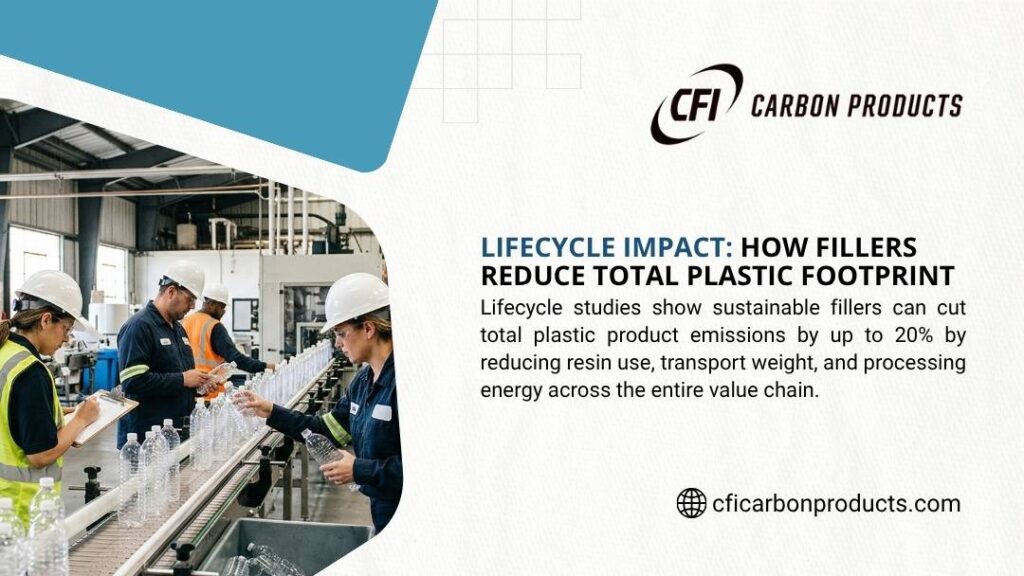
Performance Comparison of Sustainable vs Traditional Fillers
Before selecting any material, manufacturers typically compare performance across key parameters. The differences are often more practical than theoretical.
| Property | Sustainable Plastic Filler | Traditional Fillers |
| Density | Lower | Higher |
| Environmental Impact | Reduced | Elevated |
| Processing Efficiency | Improved | Standard |
| Cost Stability | More predictable | Fluctuating |
These differences help explain why sustainable plastic filler continues to gain ground across industries.
How Sustainable Plastic Filler Reduces Material Costs
Material cost remains one of the biggest drivers behind adoption. Sustainable plastic filler often has a lower specific gravity, which means more volume per unit weight. That translates directly into savings.
Here’s what happens in real production. A manufacturer replaces part of the base resin with a sustainable plastic filler. The filler occupies more space while using less raw material weight. Over time, that reduces total material consumption.
| Factor | Traditional Material | Sustainable Plastic Filler |
| Weight per unit | Higher | Lower |
| Volume efficiency | Moderate | High |
| Cost per batch | Higher | Reduced |
| Processing speed | Standard | Improved |
This is why cost-effective solutions like sustainable filler materials are gaining attention across industries.
Environmental Impact and Circular Economy Benefits
Environmental considerations now influence material selection just as much as cost or performance. Sustainable plastic filler supports these goals through measurable improvements.
| Benefit | Impact |
| Reduced CO2 emissions | Lower carbon footprint |
| Lower raw material usage | Resource conservation |
| Waste reduction | Supports circular economy |
| Energy efficiency | Reduced processing demand |
These benefits are not theoretical. They are already visible in industries that have adopted eco-friendly filler systems.
Applications Across Industries
Sustainable plastic filler finds use across a wide range of industries where cost control, weight reduction, and environmental performance matter at the same time. Its adaptability allows manufacturers to fine-tune formulations based on specific application needs without compromising output quality.
| Industry | Common Applications | Key Benefit of Sustainable Plastic Filler |
| Automotive & Rubber Products | Tires, seals, gaskets, and industrial rubber products | Reduced weight and improved efficiency |
| Packaging & Consumer Plastics | Containers, films, household goods | Lower material costs and improved sustainability |
| Construction & Infrastructure | Pipes, panels, and insulation materials | Enhanced durability and reduced resource use |
| Coatings & Paints | Industrial coatings, protective finishes | Better coverage and performance stability |
| Electrical & Electronics | Cable insulation, housings | Improved thermal and structural properties |
Across these sectors, the role of sustainable plastic filler continues to expand as manufacturers look for materials that deliver both economic and environmental advantages without disrupting existing production systems.
Sustainable Plastic Filler vs Carbon Black
Traditional carbon black has been a staple in polymer manufacturing. It provides reinforcement, UV protection, and conductivity. However, carbon black production is energy-intensive and contributes to emissions. That creates a strong case for alternatives.
| Feature | Carbon Black | Sustainable Plastic Filler |
| Emissions | High (fossil-based) | Lower (bio-based/recycled) |
| Density | Higher | Lower (lighter parts) |
| Cost Stability | Variable (Oil-dependent) | More predictable |
| Sustainability | Limited | Strong (Circular) |
Manufacturers increasingly turn to carbon black for plastics alternatives that deliver similar performance with reduced environmental impact.
Key Challenges Manufacturers Still Face
Adopting sustainable plastic filler comes with practical considerations that manufacturers must address during implementation.
| Challenge | Explanation |
| Compatibility | Requires formulation testing |
| Performance variation | Depends on the material type |
| Supply consistency | Needs reliable sourcing |
| Processing adjustments | May require optimization |
These challenges are manageable but require technical support and proper evaluation.
Future Trends in Sustainable Plastic Fillers
The direction of the industry reflects both regulatory pressure and innovation in material science.
| Trend | Industry Impact |
| Bio-based innovation | Increased renewable usage |
| Recycled materials growth | Waste reduction |
| Advanced carbon fillers | Improved performance |
| Regulatory compliance | Faster adoption |
The momentum suggests that sustainable plastic filler will continue expanding across applications.
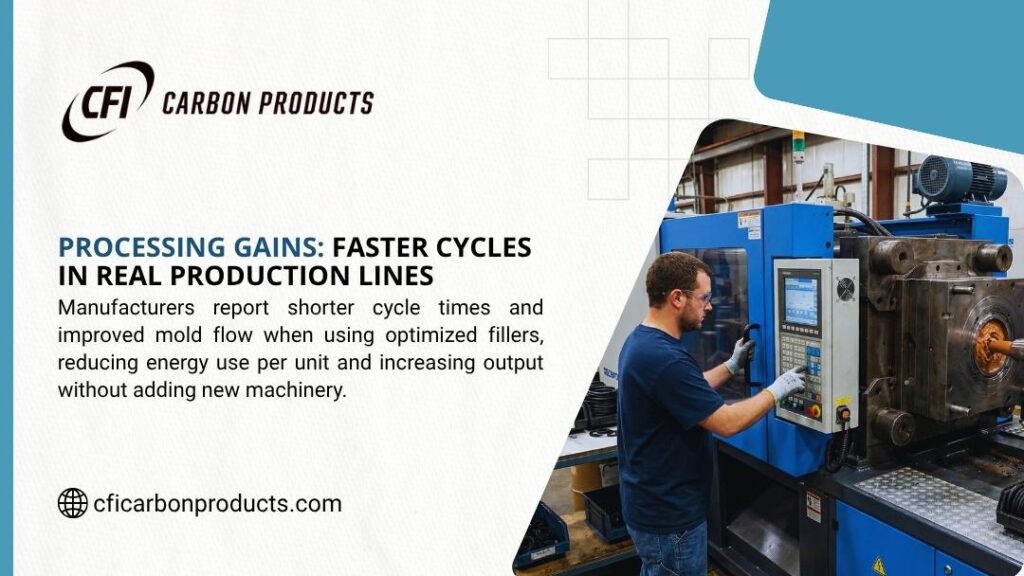
How to Choose the Right Sustainable Plastic Filler
Selecting the right sustainable plastic filler depends on several factors, including application requirements, cost targets, and performance expectations.
| Criteria | Key Consideration |
| Application | Automotive, packaging, coatings |
| Performance | Strength, flexibility, durability |
| Cost | Material savings vs initial investment |
| Sustainability | Emission reduction, recyclability |
A careful evaluation ensures the chosen filler delivers both technical and economic benefits.
Why Manufacturers Are Switching Faster Than Expected
The pace of adoption has picked up noticeably. Rising raw material prices have pushed manufacturers to reconsider traditional formulations. At the same time, sustainability regulations continue to expand across regions.
There is also a shift in customer expectations. Buyers now pay attention to environmental impact, not just product performance. That change influences purchasing decisions across industries.
Sustainable plastic filler offers a practical response. It reduces cost, supports compliance, and improves efficiency without requiring major production changes. That combination explains why adoption continues to accelerate.
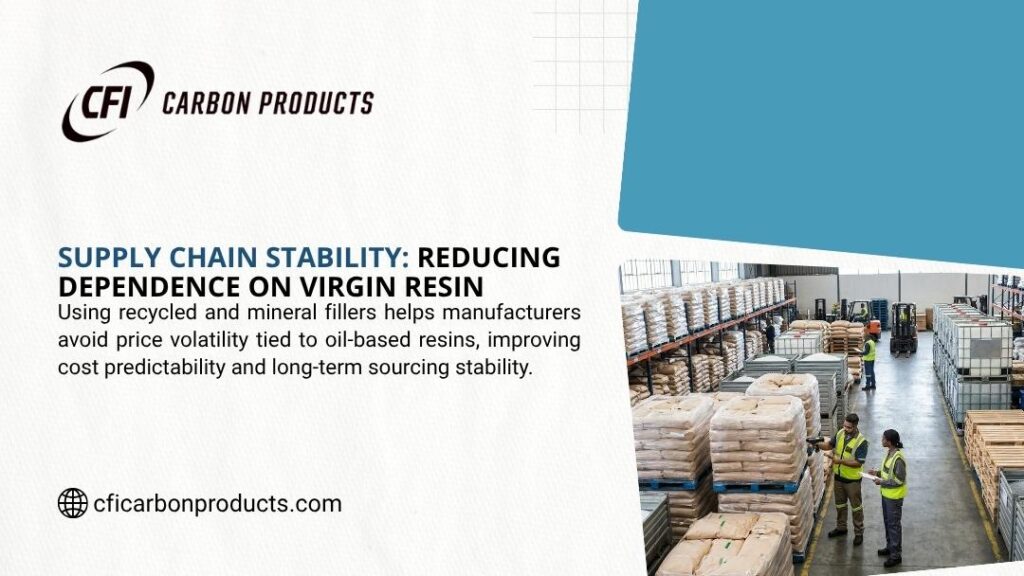
Where the Industry Moves Next
The shift toward sustainable plastic filler is not slowing down. It is becoming part of standard material selection in polymer manufacturing. Companies that adapt early tend to gain better cost control and stronger positioning in a market that values sustainability.
For manufacturers looking to move forward, working with experienced suppliers makes a noticeable difference. Companies like CFI Carbon Products focus on providing high-performance filler solutions that balance cost, efficiency, and environmental responsibility.
Exploring advanced materials, testing them in real applications, and refining formulations can lead to measurable improvements in both performance and profitability. The opportunity is already there. The next step is deciding how to use it effectively.