
Sustainable elastomer additives have quietly moved from a nice-to-have concept to something manufacturers can’t really ignore anymore. Whether the goal is lowering carbon footprint, improving processing efficiency, or simply keeping up with changing regulations, these materials are now part of everyday formulation decisions. What’s interesting is that they don’t just tick the sustainability box; in many cases, they improve performance and reduce costs over time. That shift is what makes them worth a closer look.
This article explains how sustainable elastomer additives fit into that equation, where they work best, and why they’re gaining traction across industries.
What are Sustainable Elastomer Additives and Why They Matter?
Sustainable elastomer additives are materials blended into rubber or elastomer systems to enhance performance while reducing environmental impact. That sounds straightforward, but the implications are much bigger.
For decades, elastomer formulations depended heavily on petroleum-derived raw materials and high-emission fillers. It worked, no doubt about that, but it came with a cost. According to the International Energy Agency, the chemical sector contributes roughly 7% of global greenhouse gas emissions. That number alone explains why the pressure to rethink materials has intensified.
So here’s what happened. Manufacturers started looking for ways to maintain mechanical properties and durability without carrying the same environmental burden. That’s where sustainable elastomer additives come in. They allow companies to reduce emissions, improve processing efficiency, and still meet performance expectations in demanding elastomer applications.
And that’s why it matters. It’s not just about compliance anymore; it’s about staying competitive in a market that’s shifting fast.
Key Types of Sustainable Additives Used in Elastomer Applications
Different categories of sustainable elastomer additives serve distinct roles in improving performance, reducing environmental impact, and helping manufacturers fine-tune formulations without relying on conventional high-emission materials. In practice, manufacturers often combine several types to achieve the right balance between performance, cost, and sustainability.
Bio-Based Additives and Renewable Raw Material Sources
Bio-based alternatives refer to additives derived from renewable sources rather than fossil-based raw materials. These can include plant oils, natural resins, lignin, and other biomass-derived compounds. The idea isn’t just to replace traditional inputs, but to introduce materials that align with sustainability goals while still supporting elastomer performance.
In practical terms, bio-based additives are often used to enhance flexibility, improve compatibility between components, and reduce overall carbon footprint. Their value becomes more evident in applications where environmental regulations or product certifications matter.
| Bio-Based Additive Type | Source | Typical Benefit |
| Vegetable oil derivatives | Plant-based oils | Improved flexibility and softness (acting as plasticizers) |
| Lignin-based additives | Wood byproducts | Reduced carbon footprint and increased rigidity |
| Natural resins | Tree extracts | Better adhesion and compatibility |
These materials are increasingly used in applications where sustainability targets are just as important as performance outcomes.
Recycled Fillers and TPE Recycling Innovations
Recycled fillers are materials recovered from post-industrial or post-consumer waste and processed for reuse in elastomer formulations. Instead of relying entirely on virgin inputs, manufacturers incorporate these fillers to reduce waste and support circular economy practices.
With advancements in tpe recycling, it’s now possible to recover thermoplastic elastomers and reintroduce them into production with consistent quality. That wasn’t always the case. Earlier recycling methods often led to performance loss, but newer technologies have improved material stability and reliability.
| Recycled Filler Type | Source | Typical Benefit |
| Recycled elastomer powder | Industrial scrap &Post-consumer rubber scrap | Reduced raw material usage |
| Recovered carbon-based fillers (rCB) | Post-consumer products (Pyrolysis) | Lower environmental impact |
| Reprocessed TPE | Manufacturing waste | Cost efficiency and reuse |
The shift toward recycled fillers reflects a broader move toward circular manufacturing, where materials remain in use for longer periods.
Functional Additives for Thermal Stability and Durability
Functional additives are designed to modify specific properties of elastomers, particularly when performance under stress is critical. These additives don’t just fill space in a formulation; they actively improve how the material behaves under heat, pressure, or chemical exposure.
For example, stabilizers help maintain thermal stability, preventing degradation during processing or long-term use. In high-performance elastomer applications, this can significantly extend product lifespan and reduce maintenance or replacement cycles.
| Functional Additive Type | Purpose | Typical Benefit |
| Thermal stabilizers | Heat resistance | Improved durability |
| Antioxidants | Oxidation control | Longer service life |
| UV stabilizers | UV protection | Enhanced outdoor performance |
These additives don’t always get attention, but they play a quiet role in ensuring long-term reliability.
Reinforcement Fillers as Carbon Black Alternatives
Reinforcement fillers are materials added to elastomers to improve mechanical properties such as strength, abrasion resistance, and elasticity. Traditionally, carbon black has been the dominant choice, but sustainable elastomer additives now offer alternative solutions with lower environmental impact.
These alternatives include engineered carbon materials and organic fillers that provide similar reinforcement while contributing to reduced emissions. For manufacturers exploring options beyond conventional materials, understanding carbon black filler alternatives can help guide formulation decisions without compromising performance.
| Reinforcement Filler Type | Function | Typical Benefit |
| Organic mineral fillers | Structural support | Lower density and weight |
| Engineered carbon alternatives | Reinforcement | Reduced carbon footprint |
| Hybrid filler systems | Combined performance | Balanced strength and processability |
In practical applications, some manufacturers are already adopting engineered organic fillers such as Austin Black 325, which is derived from bituminous coal and designed to function as a low-emission alternative to traditional carbon black. Its lower specific gravity helps reduce compound weight while improving processability, making it particularly useful in rubber, plastic, silicone, and coating formulations where both performance and sustainability are priorities.
Performance vs Sustainability: Do Eco-Friendly Additives Compromise Quality?
There’s always that lingering question, do sustainable elastomer additives actually perform as well as traditional ones? The short answer is: it depends on formulation, but often yes.
Early versions struggled to match the mechanical properties of conventional materials. That’s changed. Today’s additives are designed with performance in mind from the start.
Traditional vs Sustainable Additives Comparison
| Property | Traditional Additives | Sustainable Elastomer Additives |
| Mechanical Properties | Proven and consistent | Comparable with optimized formulations |
| Carbon Footprint | High emissions | Lower lifecycle emissions |
| Processing Efficiency | Standard | Often improved due to lower density |
| Thermal Stability | Reliable | Comparable in modern systems |
| Cost Efficiency | Variable | Better long-term value |
Environmental Impact and Carbon Footprint Reduction in Elastomers
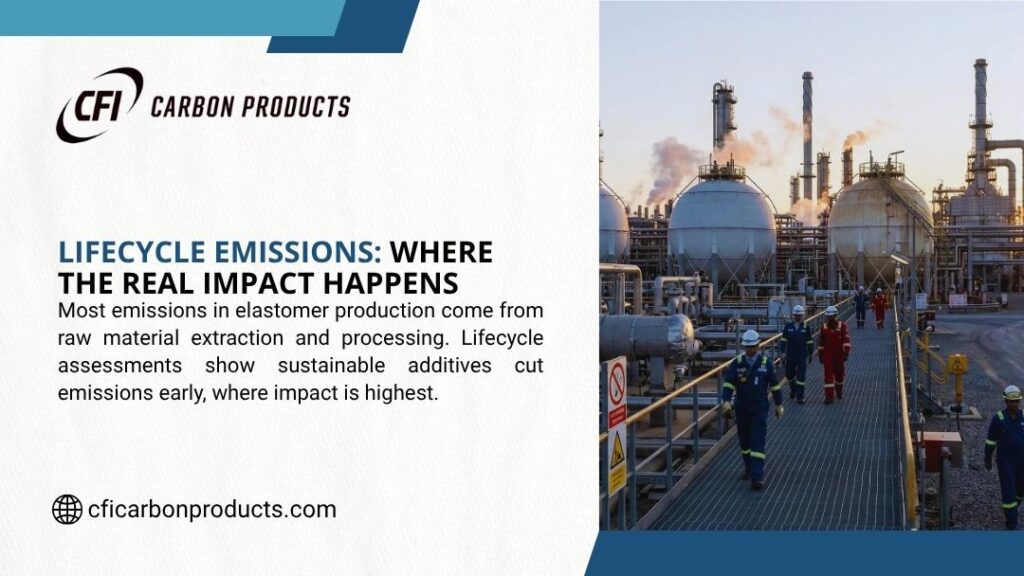
The environmental impact of elastomer production extends across the entire lifecycle, from raw material extraction to disposal. Sustainable elastomer additives help reduce emissions at multiple stages, particularly during material sourcing and processing.
According to the U.S. Environmental Protection Agency, adopting recycled and low-emission materials can significantly lower industrial greenhouse gas emissions. That’s not just theory, it’s already happening across sectors.
What stands out is how sustainable elastomer additives align with circular economy principles. Materials are reused, waste is minimized, and energy consumption decreases over time.
Environmental Impact Comparison
| Factor | Conventional Materials | Sustainable Elastomer Additives |
| Carbon Emissions | High | Reduced lifecycle emissions |
| Resource Usage | Virgin raw material | Recycled and renewable sources |
| Waste Generation | Significant | Lower due to reuse strategies |
This shift reflects a broader effort to reduce environmental impact without sacrificing industrial performance.
Role of Sustainable Elastomer Additives in the Automotive Industry
If there’s one sector pushing this transition forward, it’s the automotive industry. Manufacturers are under constant pressure to reduce weight, improve efficiency, and meet strict environmental regulations. Sustainable elastomer additives help address all three.
Automotive Use Cases
| Application | Additive Type | Benefit |
| Tire Components | Sustainable fillers | Lower rolling resistance |
| Seals & Gaskets | Bio-based additives | Improved flexibility |
| Interior Components | Recycled elastomers | Reduced environmental impact |
| EV Systems | Lightweight fillers | Enhanced energy efficiency |
Even small weight reductions can improve fuel efficiency or battery range. That’s why material selection has become such a critical factor.
How Sustainable Additives Help Optimize Formulations and Reduce Costs
There’s a common assumption that sustainability comes at a higher cost. In practice, that’s not always the case.
Sustainable elastomer additives often reduce overall material usage. Lower-density fillers, for example, allow manufacturers to maintain volume while using less raw material.
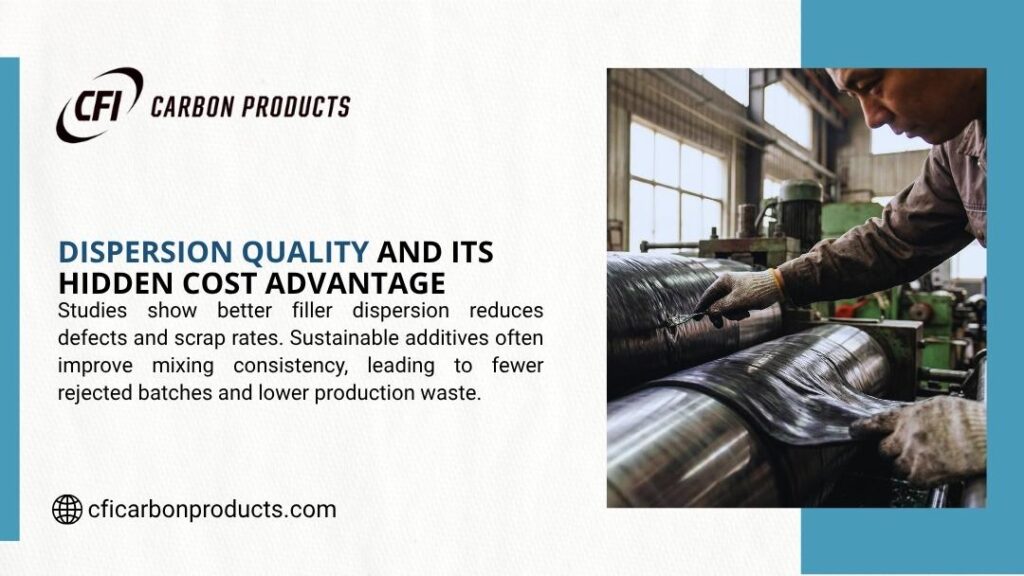
At the same time, improved dispersion and processing efficiency can shorten production cycles. That translates into lower energy use and reduced operational costs.
Manufacturers frequently rely on solutions such as advanced polymer additives and tailored cost-effective carbon solutions to strike that balance between cost and performance.
Sustainable Alternatives to Carbon Black in Elastomer Formulations
Carbon black has long been a standard reinforcement material, but its environmental footprint has pushed manufacturers to consider alternatives.
Understanding what carbon black is and its role in carbon black for rubber helps explain why replacing it is not straightforward. It provides strength, conductivity, and durability, all critical properties.
Still, newer materials are closing the gap. Organic fillers and advanced carbon-based alternatives offer similar benefits with reduced emissions. Options such as carbon filler for plastics demonstrate how these materials can be adapted across applications.
Carbon Black vs Alternatives
| Property | Carbon Black | Sustainable Alternatives |
| Reinforcement | High | Comparable |
| Carbon Footprint | High | Lower |
| Weight | Moderate | Often lower |
| Processing | Established | Improving with new technologies |
This comparison highlights why manufacturers are gradually shifting toward sustainable elastomer additives.
Processing Efficiency and Manufacturing Benefits
Processing efficiency often determines whether a material is practical at scale. Sustainable elastomer additives tend to improve flow behavior, dispersion, and mixing characteristics.
Manufacturing Impact of Sustainable Additives
| Factor | Traditional Materials | Sustainable Elastomer Additives |
| Mixing Time | Standard | Reduced |
| Energy Consumption | Higher | Lower |
| Dispersion Quality | Moderate | Improved |
| Production Consistency | Variable | More stable |
These improvements don’t always show up immediately, but over time they lead to better productivity and reduced operational costs. That’s where manufacturers begin to see real value.
Challenges in Adopting Sustainable Elastomer Additives
Despite clear advantages, adoption still presents a few practical challenges. These are less about capability and more about transition.
Key Adoption Challenges
| Challenge | Description | Industry Response |
| Compatibility | Integration with existing formulations | Requires testing and adjustment |
| Cost Perception | Higher upfront cost concerns | Offset by long-term savings |
| Supply Consistency | Availability of materials | Improving with market growth |
| Performance Validation | Need for real-world data | Ongoing research and trials |
As adoption increases, these challenges are becoming easier to manage. Still, they require careful planning.
Future Trends: Circular Economy and Next-Generation Elastomer Materials
The next phase of elastomer development is closely tied to circular economy principles. Manufacturers are moving toward systems where materials are reused, recycled, and continuously optimized.
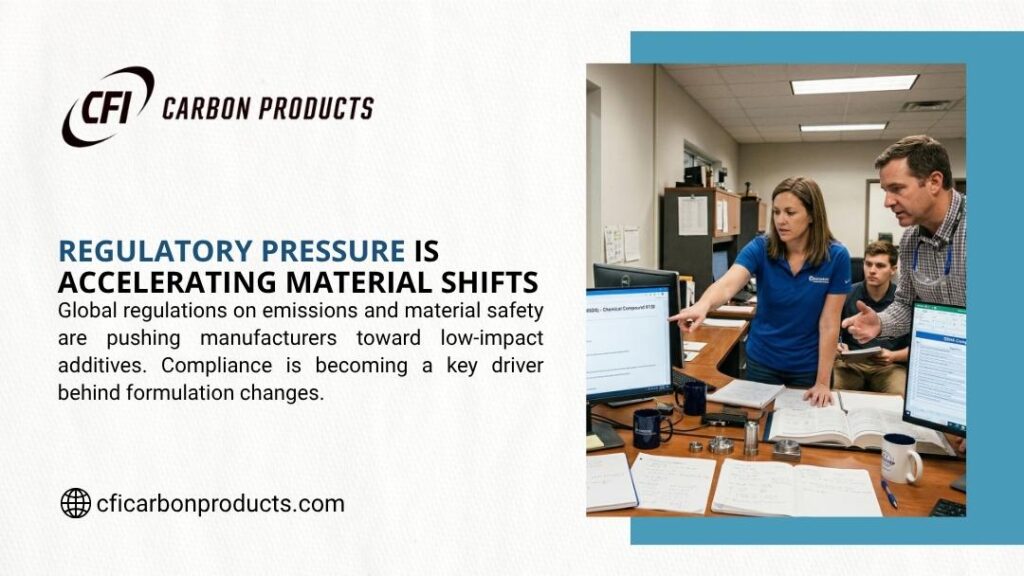
Bio-based innovations, improved recycling methods, and low-emission production processes are shaping this transition. Regulatory pressure is also playing a role, particularly in regions with strict environmental policies.
| Trend | Description | Impact |
| Advanced recycling | Improved material recovery | Reduced waste |
| Bio-based materials | Renewable alternatives | Lower emissions |
| Lightweight formulations | Reduced material usage | Higher efficiency |
These trends suggest that sustainable elastomer additives will become standard practice rather than a specialized option.
Where This Shift Leads the Industry
The shift toward sustainable elastomer additives is no longer theoretical. It’s already influencing how materials are selected, processed, and evaluated across industries.
Manufacturers that take a proactive approach tend to gain a clear advantage. They improve performance, reduce environmental impact, and stay ahead of regulatory changes. More importantly, they build resilience into their supply chains and production strategies.
For companies looking to move in that direction, working with experienced partners makes a difference. Providers that specialize in advanced sustainable carbon solutions and operate as a reliable industrial carbon supplier can help bridge the gap between concept and real-world application.
CFI Carbon Products stands out in this space by offering proven, low-emission filler solutions that balance performance, cost, and sustainability. Their expertise in high-performance carbon alternatives and formulation support allows manufacturers to transition without unnecessary risk.
If your goal is to improve efficiency, reduce carbon footprint, and maintain high performance, it may be time to reassess your material strategy. Sustainable elastomer additives are not just part of the future; they are already shaping how leading manufacturers operate today.