
The transition of environmentally friendly plastic filler from a niche experimental concept to a cornerstone of modern manufacturing is hitting a fever pitch. Today, these materials aren’t just green alternatives; they are strategic assets in packaging, consumer electronics, and heavy-duty industrial polymers.
This guide explores how these sustainable additives actually function, why the industry is pivoting toward them so aggressively, and which specific options offer the best ROI in terms of durability, cost-control, and ecological footprint, without forcing a trade-off in quality.
Environmentally Friendly Plastic Filler: What It Is and Why It Matters
In the simplest terms, an environmentally friendly plastic filler is a functional substance integrated into polymers to displace virgin resin, sharpen processing efficiency, and curb the overall carbon load of a part.
Unlike traditional fillers that often bloat a product’s weight and carbon intensity, these sustainable versions prioritize material lean-ness and low-emission sourcing. In the field, an environmentally friendly plastic filler usually draws from recycled waste, bio-based feedstocks, or innovative low-carbon solutions that fit perfectly into modern corporate ESG mandates.
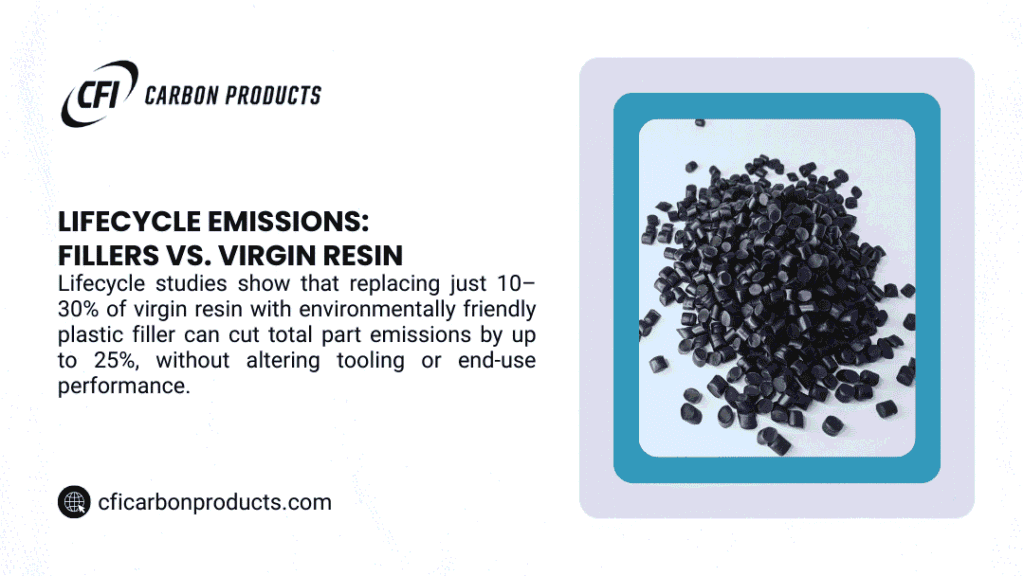
The stakes here are massive. Data highlights that plastics are responsible for roughly 3.4% of total global greenhouse gas emissions. By slashing virgin resin demand through the use of environmentally friendly plastic filler, factories can immediately cut the energy overhead required for production.
Furthermore, the U.S. EPA points out that optimizing material efficiency is often the most direct path to reducing lifecycle emissions without the headache of a total product redesign. This efficiency gap is precisely where these fillers sit, explaining their sudden dominance in automotive components and retail packaging.
How Conventional Fillers Increase Environmental Burden
Standard additives like calcium carbonate, talc, or legacy carbon blacks have long played vital roles, yet they often saddle a product with high density and hidden energy costs. When a part is heavier, it costs more to ship, burns more fuel in transit, and locks more emissions into the supply chain. Conversely, an environmentally friendly plastic filler focuses on high volume efficiency and lower mass.
The fundamental flaw with legacy fillers isn’t their performance, it’s their inherent bulk. An environmentally friendly plastic filler fixes this by trimming the fat while keeping the structural skeleton of the plastic intact.
For those pivoting toward these materials, it helps to first master the basics of carbon-based additives. Many start with a guide on what carbon black is and how its specific morphology dictates polymer behavior. From there, technical comparisons like the breakdown of black vs carbon black help engineers see why not every carbon source carries the same environmental weight.
Sustainable Material Pathways Reshaping Plastic Fillers
The spectrum of environmentally friendly plastic filler technology now touches several distinct material classes. Some are born from recycled streams, while others utilize circular carbon sources. We are also seeing a massive surge in bio-based fillers pulled from agricultural leftovers.
An analysis confirmed that recycled fillers are a primary engine for reducing virgin polymer demand and stabilizing lifecycle emissions. These work exceptionally well in rigid containers and molded industrial parts where ruggedness is a higher priority than a “crystal clear” aesthetic.
Another major branch involves low-emission carbon fillers. These are engineered to bypass the high-pollution furnace processes of the past, aligning with the strict carbon regulations now hitting global markets. Because procurement teams are increasingly wary of carbon black pricing trends, these sustainable alternatives are becoming more attractive for their price stability as much as their low footprint.
Performance Benefits That Go Beyond Sustainability
An environmentally friendly plastic filler isn’t just a feel-good additive; it’s a performance booster. These materials frequently enhance processing stability and dimensional precision. Because many sustainable fillers are less dense, they offer better volume efficiency, meaning a manufacturer can actually pump out more units from a single ton of compound. That translates into lower raw material spend and reduced freight costs.
Even in high-stress applications where reinforcement is non-negotiable, an environmentally friendly plastic filler can hold its own. Research suggests that fine-tuned filler dispersion can actually boost tensile strength even at higher loading levels. This synergy between green goals and mechanical toughness is why these fillers are rapidly displacing heavier mineral options.
To see these gains in action, one must look at the mechanics of plastic reinforcement. Understanding how filler shape and surface area interact with resin allows for maximum durability without the need for excessive, expensive plastic.
Environmentally Friendly Plastic Filler in Packaging and Consumer Products
The packaging sector is currently the biggest laboratory for filler innovation. E-commerce, in particular, relies on eco-friendly void fill packaging, where every gram saved reduces the carbon cost of the last mile. These void-fill systems are increasingly ditching petroleum-derived foams for recycled or bio-derived fillers.
You see this shift in the home goods market as well. The popularity of natural bean bag filling and eco-friendly bean bag filler shows a clear consumer rejection of old-school polystyrene beads. Brands have discovered that the most cost-effective way to fill a product is often through recycled bean bag filling, proving that a non-toxic bean bag filler can be both a marketing win and a budget saver.
The table below provides a snapshot of how these filler categories stack up against one another.
| Filler Category | Primary Source | Typical Application | Environmental Impact | Performance Notes |
| Recycled polymer filler | Post-consumer waste | Packaging, containers | Lowers virgin resin use | Stable, cost-effective |
| Low-emission carbon filler | Processed carbon | Industrial plastics | Reduced CO₂ footprint | High dispersion efficiency |
| Bio-based filler | Agricultural byproducts | Consumer goods | Renewable input | Lower density, moderate strength |
Industrial Polymers and Additive Compatibility
Integrating an environmentally friendly plastic filler into a production line requires harmony with existing chemistry. Their success depends on how well they play with plastic additives that handle things like UV resistance or thermal aging. Engineers must ensure that a green filler doesn’t compromise the long-term life of the part.
In the world of coatings and complex moldings, the choice of an additive is everything. A deep dive into coating additives reveals how filler selection can alter viscosity and curing times. This same technical rigor applies to the polymer additives found in car bumpers or construction materials.
Many forward-thinking firms are now pairing these fillers with eco-friendly rubber alternatives to create entirely sustainable elastomer systems. This multi-layered approach allows them to abandon traditional, high-impact fillers without losing the snap or durability of their products.
Environmental Data and Measurable Impact
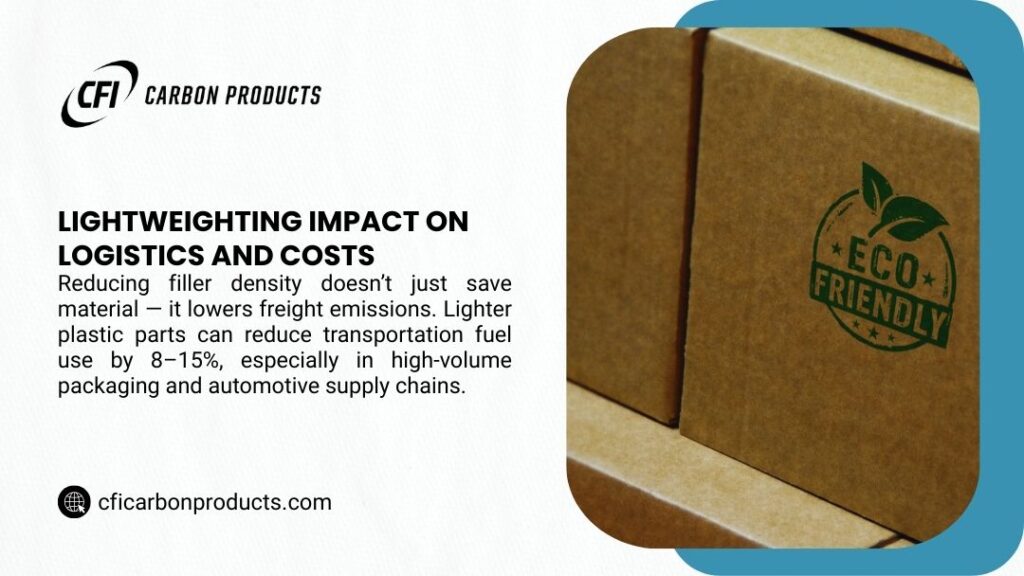
The move toward an environmentally friendly plastic filler is backed by hard numbers, not just slogans. The reports that material efficiency, driven largely by filler optimization, could slash emissions by 30% by 2060. The U.S. EPA echoes this, noting that lightweighting is the “low-hanging fruit” for cutting supply chain emissions.
Further research proved that fillers derived from waste streams can actually improve the barrier properties of packaging, making them more effective at preserving contents while remaining fully recyclable. This data is why these materials are moving from simple boxes into high-stakes medical and aerospace polymers.
Choosing the Right Environmentally Friendly Plastic Filler
Finding the perfect environmentally friendly plastic filler involves a balancing act between density, dispersion, and sourcing honesty. Materials that prioritize recycled content or low-emission carbon usually offer the most robust green credentials. However, rigorous testing is still required, especially when these fillers are used in load-bearing structural parts.
When looking for a replacement for traditional materials, manufacturers often analyze carbon black alternatives to find fillers that mimic that classic reinforcement but without the heavy carbon debt. Understanding the core of carbon black density and the complexities of carbon black structure is vital for anyone trying to swap them out for more sustainable substitutes.
Where Sustainability Meets Profitability
Ultimately, the environmentally friendly plastic filler is winning because it makes business sense. Less resin means lower material costs. Less weight means lower shipping bills. Better yields mean less scrap hitting the floor. These aren’t just environmental wins; they are bottom-line victories.
This alignment is exactly why these materials are now the standard in everything from automotive interiors to sustainable furniture. Sustainable fillers are no longer a compromise or a premium add-on; they are the mark of smarter, data-driven material science.
For those ready to shrink their footprint without shrinking their performance, the path forward is built on these efficient, transparent, and high-performing materials.