
Cost-effective carbon solutions now sit at the center of industrial strategy. Boards, regulators, and customers all push for deep cuts in emissions, yet capital remains finite. The question that matters is not whether a company acts, but which cost-effective carbon solutions deliver the largest and most reliable reductions per dollar in the real world.
Global policy, including the Inflation Reduction Act in the United States and rising carbon prices in Europe and Asia, has turned carbon management into a core financial decision rather than a branding exercise. The most resilient businesses treat cost-effective carbon solutions as a long-term portfolio that spans energy use, carbon capture and storage, carbon removal, and even the materials hidden inside every product.
This article sets out a comprehensive framework for cost-effective carbon solutions with a global lens. It explains how industrial facilities consider technologies such as carbon capture and storage, direct air capture, bioenergy with carbon capture and storage, nature-based sequestration, and materials innovation.
Why Cost-Effective Carbon Solutions Have Become Non-Negotiable?
Global energy-related carbon emissions reached about 37.4 billion metric tons of CO₂ in 2023, according to the International Energy Agency, despite decades of climate pledges. At the same time, the World Bank reports that carbon pricing mechanisms now cover around 28% of global emissions, which means unmanaged emissions carry direct financial risk.
The United States raised the stakes through the Inflation Reduction Act. Its enhanced 45Q tax credits pay up to $85 per metric ton of CO₂ stored from industrial facilities, which changes the numbers for many carbon capture projects. Europe and parts of Asia move in the same direction with emissions trading systems and dedicated funds for heavy industry.
In that context, cost-effective carbon solutions can no longer be a loose phrase. For decision makers who sign off on capital budgets, the phrase translates into a specific metric: cost per ton of CO₂ reduced over the life of a project, relative to credible alternatives and to the cost of inaction.
What Makes A Carbon Solution Truly Cost-Effective?
From a financial and technical angle, cost-effective carbon solutions share a few consistent traits. They cut carbon emissions at a competitive cost per ton, they match the operating reality of the facility, and they remain strong under different energy and carbon price scenarios.
A steel plant with unavoidable process emissions will judge cost-effective carbon solutions differently from a plastics compounder or a coatings manufacturer. That is why an accurate benchmark considers several factors at once:
The first factor is low cost. Total lifetime cost per ton of CO₂ removed or avoided, after subsidies and tax credits. Analysts often express this through marginal abatement cost curves to show which measures sit below or above a relevant reference line, such as the carbon price.
The second factor is technical maturity. A technology such as conventional carbon capture and storage for gas processing has decades of operating history. Direct air capture, by contrast, remains in an earlier stage, with high cost and limited deployment.
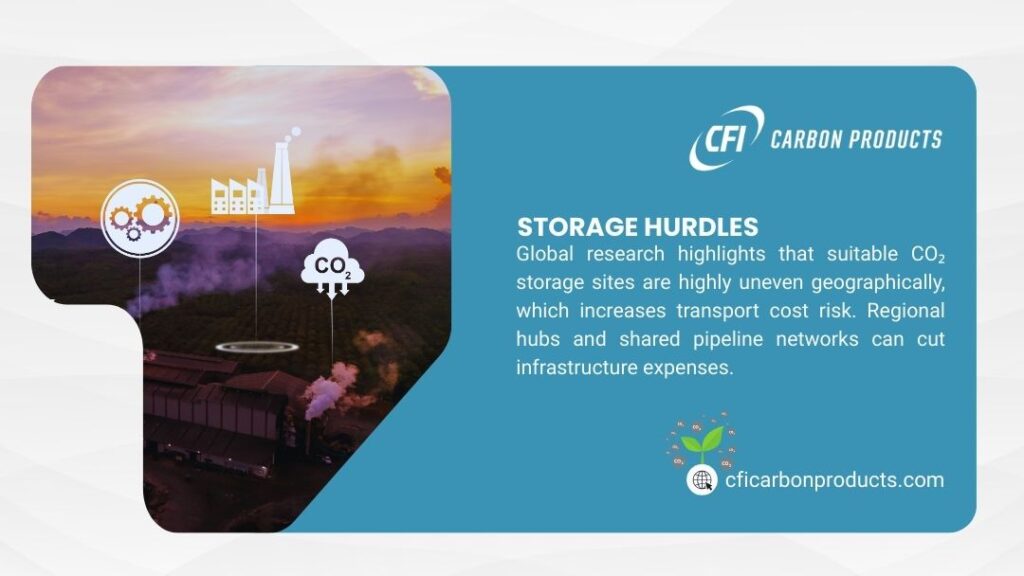
Another factor is scale and storage capacity. A solution that looks attractive on a pilot line can fail at the regional scale if suitable storage sites are scarce or social license is weak.
Finally, serious decarbonization strategies consider co-benefits and risks. That includes energy savings, air quality, soil health, water use, and the risk that stored CO₂ returns to the atmosphere or that land-based projects reverse.
Cost-effective carbon solutions sit where all of these considerations intersect in a way that fits a given facility, not just a model.
The Main Technology Families Behind Cost-Effective Carbon Solutions
Many global discussions focus on a small cluster of acronyms, but the field is broader and more interconnected than it first appears.
Carbon Capture And Storage For Point Sources
Carbon capture and storage, often shortened to CCS, refers to the capture of CO₂ from industrial emissions, its compression, transport, and injection into deep geological formations. This model suits refineries, cement plants, steel mills, and chemical complexes with concentrated CO₂ streams. The IEA treats CCS as essential for cost-effective decarbonization in sectors where process emissions are hard to avoid.
When CCS integrates into existing industrial sites, it may use shared pipelines and storage hubs that lower unit cost. It also aligns with the enhanced tax credit support in the United States and similar incentives elsewhere, which improves the business case and pushes more CCS projects into the cost-effective category.
CCUS: Utilization As Well As Storage
Carbon capture, utilization, and storage, or CCUS, extends this model by turning captured CO₂ into products before any final storage step. This includes synthetic fuels, chemicals, polymers, and construction materials that bind CO₂. In practice, the economics depend on the value of the product and its market scale.
For some industrial facilities, such as fertiliser or synthetic fuel producers, CCUS can form part of a broader industrial cluster that shares capture infrastructure and storage capacity and spreads cost while still delivering cost-effective carbon solutions.
Direct Air Capture For Long-Term Removal
Direct air capture removes CO₂ from ambient air rather than from a smokestack. Its ability to clean up legacy emissions has strategic value, yet cost remains high. Current public estimates from non-profit and government sources often place costs in the range of several hundred dollars per ton for commercial plants.
Direct air capture makes sense for rigorous long-term removal in cases where other measures cannot address residual emissions. Its role in cost-effective carbon solutions is therefore narrower and more long-term than that of CCS or CCUS, but it remains a vital part of many net-zero roadmaps.
Bioenergy With Carbon Capture And Storage
Bioenergy with carbon capture and storage, or BECCS, uses biomass for power or fuels and captures the CO₂ released. In theory, this pathway can yield net-negative emissions because the biomass absorbs CO₂ during growth.
The IPCC’s assessments describe BECCS as one of several negative emissions options, while also warning that it must remain limited and well-governed to avoid competing with food systems and biodiversity.
Where biomass resources exist and suitable storage sites lie nearby, BECCS can join the set of cost-effective carbon solutions, especially in regions with strong policy support.
Land-Based Carbon Sequestration
Land-based methods such as reforestation, afforestation, improved forest management, and soil carbon projects often show some of the lowest costs per ton. They can also improve soil health and resilience. Yet they face challenges in measurement and permanence, and many voluntary markets now demand stricter standards.
These approaches provide important carbon solutions but should not substitute for direct emission cuts or physical carbon capture and storage where those are available and justified.
Materials And Process Innovation
Most public debate focuses on large infrastructure, yet a huge share of global emissions comes from the manufacture and use of materials, including plastics, rubber, silicone, and coatings. In these areas, cost-effective carbon solutions rarely involve heavy capture hardware. Instead, they involve smarter raw material choices and better process control.
Filler systems provide a clear example. Conventional carbon black gives strength and color in many compounds, but its manufacture carries a heavy emissions burden, and its density adds weight.
When manufacturers switch to lower-emission, lower-density fillers, they can reduce the amount of material required per unit of performance and trim both energy use and transport weight. For example, Austin Black 325 is a bituminous coal–derived filler with low specific gravity that helps reduce compound weight.
In many manufacturing scenarios, these adjustments form a quiet but powerful part of cost-effective carbon solutions.
Comparative Economics Of Today’s Carbon Solutions
A global view shows wide variation in cost per ton across technology families. Some options already generate net savings; others still rely on heavy policy support.
Approximate Cost And Maturity Of Key Carbon Solutions
| Solution Type | Typical Cost per tCO₂ | Maturity Level | Main Application | Cost-Effectiveness Notes |
| Energy efficiency in industry | Often negative to low positive cost | Fully commercial | Cross-sector | Saves energy and reduces emissions at once |
| Fuel switch to clean energy | Low to moderate cost | Fully commercial | Power and heat | Depends on local energy prices |
| Point-source CCS | Moderate cost | Commercial too early commercial | Cement, steel, chemicals | Strong policy support in many regions |
| CCUS with products | Moderate to higher cost | Early commercial | Fuels, chemicals, materials | Product value offsets some capture cost |
| BECCS | Moderate to high cost | Pilot to commercial | Power, fuels | Net-negative potential where biomass is sustainable |
| Direct air capture | High cost at present | Pilot to early commercial | Long-term removal | Strategic option for hard-to-abate residual emissions |
| Land-based sequestration | Low to moderate cost | Widely used | Forestry and agriculture | Sensitive to permanence and land constraints |
| Materials innovation | Highly context-specific | Commercial | Manufacturing | Often reduces both material cost and emissions |
This mix highlights why serious decarbonization strategies do not chase a single technology. Companies instead design cost-effective carbon solutions as a layered portfolio that aligns with their assets, markets, and risk tolerance.
Sector View: Where Cost-Effective Carbon Solutions Deliver The Most
Different sectors face different technical constraints and policy signals. That shapes the relative appeal of each tool within the wider carbon toolbox.
In heavy industry, such as steel and cement, process chemistry forces a large fraction of emissions. Energy efficiency can only go so far. For these facilities, point-source CCS and CCUS often become central to cost-effective carbon solutions, particularly where shared CO₂ transport networks reduce expense.
Power systems face another choice. In many regions, renewables undercut new fossil capacity on cost. Yet grids still depend on firm power. CCS on gas plants can extend the life of those assets in a lower-carbon form, though it must compete against storage and demand-side measures.
Manufacturing sectors that depend heavily on plastics, rubber, silicone, and coatings see a different pattern. Here, materials decisions and process choices can shape both emissions and cost. The carbon black pricing trends show how volatile feedstock markets influence input costs. That volatility makes alternative filler solutions, including low-emission organic fillers, more attractive as part of cost-effective carbon solutions.
In building materials and roofing, the same principle applies. The rubber roofing material performance notes how filler systems influence durability, weight, and long-term cost. These decisions directly affect the carbon intensity of final products and the total value proposition for buyers.
Agriculture and land use represent yet another frontier. Soil carbon measures and biomass energy with CCS form part of regional strategies, but land availability, food security, and water constraints limit their ultimate contribution.
Sector-Specific Snapshot Of Cost-Effective Carbon Solutions
| Sector | Main Decarbonization Levers | Role Of CCS / CCUS | Role Of Materials And Fillers |
| Steel and cement | Efficiency, fuel shifts, CCS | Central for process emissions | Limited |
| Power generation | Renewable capacity, grid upgrades, CCS on gas | Important in some markets | Minor |
| Plastics and rubber | Material redesign and filler optimization | Niche | High impact |
| Silicone and coatings | Additive selection and process control | Rare | Significant via additives |
| Agriculture and land | Soil carbon, forestry, BECCS | Important for biomass | Low for fillers |
From Strategy To Implementation: A Practical Roadmap
Once an organization understands which families of solutions fit its assets, it still faces the task of implementation. Cost-effective carbon solutions do not result from a single decision, but from a sequence of steps.
The first step is a detailed emissions baseline. For manufacturers who depend on complex compounds, this includes the embedded carbon in additives and fillers, as well as direct fuel use. The plastic filler material options gives a sense of the range of choices available in plastics, each with its own carbon profile.
The second step is a ranking exercise that uses cost per ton, implementation complexity, and co-benefits as criteria. Marginal abatement cost curves help highlight which actions are cheap and which depend on policy support.
The third step is the execution of no-regret measures. These often include energy efficiency, clean electricity contracts, and material substitutions. In industries where carbon black plays a major role, help technical teams assess where organic fillers can match performance at lower emissions.
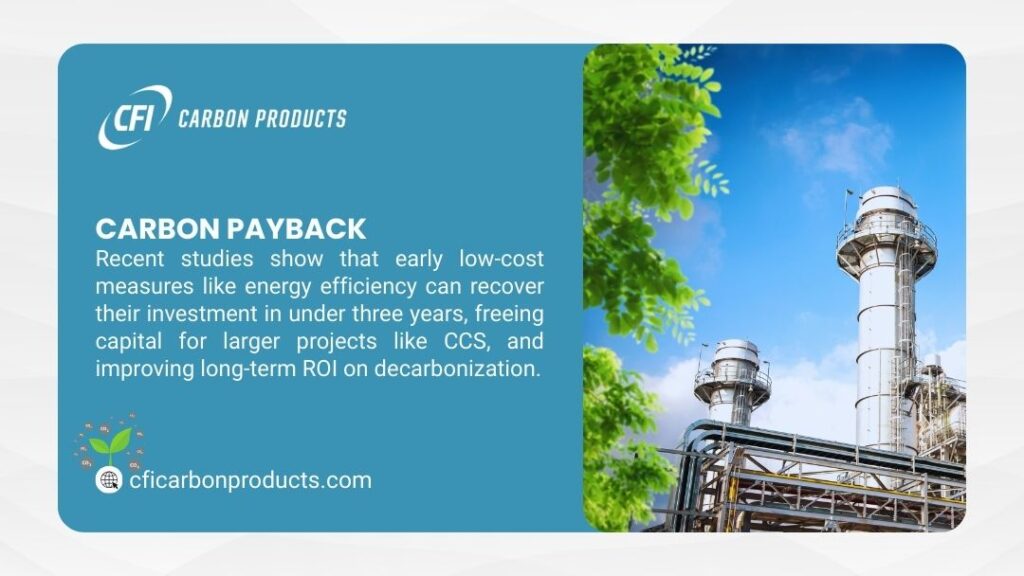
The fourth step is planning for CCS, CCUS, or BECCS, where these technologies match process conditions. That requires serious due diligence on storage capacity, transport logistics, and long-term monitoring. The final step is careful tracking of data and public reporting. Stakeholders now expect clear evidence that cost-effective carbon solutions rest on real reductions rather than accounting tricks.
Roadmap For Cost-Effective Carbon Solutions In Practice
| Phase | Core Action | Example In Heavy Industry | Example In Plastics And Rubber |
| Baseline | Full emissions mapping | Plant-wide CO₂ inventory | Life cycle view of fillers and additives |
| Prioritization | Rank by abatement cost | Compare efficiency upgrades vs CCS | Compare traditional carbon black vs low-emission fillers |
| Fast moves | Implement low-cost measures | Waste heat recovery and process controls | Switch to lighter, low-density filler where feasible |
| Strategic projects | Develop CCS or CCUS | Feasibility and storage studies | Limited role, more focus on supply chain |
| Long-term options | Explore DAC or BECCS | Pilot in regions with suitable biomass | Further material innovation and recycling models |
Throughout this roadmap, cost-effective carbon solutions emerge not as a static product list but as the outcome of thoughtful sequencing and realistic appraisal.
Material-Level Solutions: Fillers As Part Of The Carbon Equation
For companies in plastics, rubber, silicone, and coatings, material-level decisions matter just as much as energy strategy. When a compound uses a lower-density filler without sacrificing performance, it immediately reduces product weight, shipping emissions, and total raw material demand.
In plastics, the way different filler families influence stiffness, impact resistance, and cost becomes a key design variable. For teams still relying on traditional carbon black, comparing it with modern alternative fillers is increasingly important. CFI’s breakdown of black pigments versus carbon black gives engineers a clearer picture of where the properties align and where meaningful trade-offs appear.
Coatings follow the same principle. CFI’s work on advanced coating additives highlights how specific additives strengthen films, improve UV resistance, and support weight and carbon reductions at the formulation level.
The story continues in resins and adhesives, where CFI’s insights into adhesive additives and resin additives show how manufacturers can enhance durability and performance while also lowering the embedded carbon in each batch.
These steps give technical and procurement teams practical levers to build cost-effective carbon solutions into the material itself, not just into the emissions stack above it. Taken together, these choices allow manufacturers to lighten a product’s footprint without compromising quality or increasing cost.
How Cost-Effective Carbon Solutions Become A Competitive Advantage
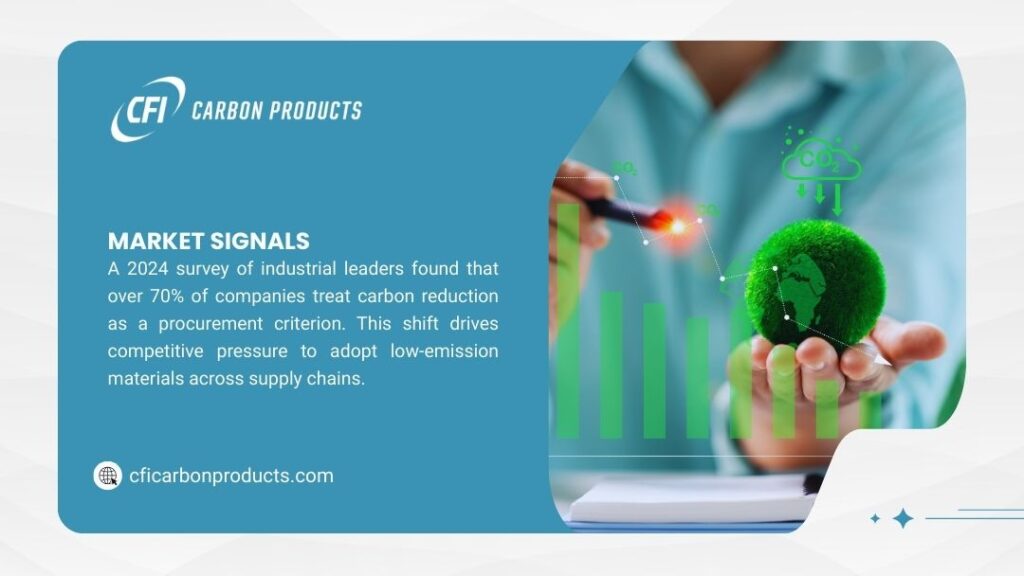
Cost-effective carbon solutions now shape competitive position as much as product design and logistics. Firms that seize low-cost opportunities early often lock in advantages: lower exposure to future carbon prices, stronger resilience against energy shocks, and a clear story for investors who treat carbon as a proxy for long-term risk.
In manufacturing, the carbon conversation must extend beyond smokestacks and into the compounds themselves. CFI’s broader resource index brings together technical and market insights that show how the right mix of filler selection, additive strategy, and process refinement can strengthen profitability while delivering credible carbon reductions.
The companies that thrive through the next phase of the energy transition will not rely on a single silver bullet. They will treat cost-effective carbon solutions as a portfolio, blend CCS and CCUS where process emissions demand it, partner with credible technology providers, and pay close attention to the materials that flow through their plants every day.