
High-performance rubber fillers are a critical part of modern rubber reinforcement additives used across industries. They influence everything from tensile strength to cycle time, from product weight to long-term durability.
If you’ve ever worked with rubber compounds long enough, you’ve probably seen how small formulation changes can throw everything off, or surprisingly fix issues you weren’t even targeting.
A filler swap might start as a cost decision, and then suddenly mixing improves, or weight drops more than expected. It doesn’t always follow a clean pattern, which is probably why filler selection ends up being more trial-and-error than most people admit.
This guide takes a closer, more practical look at how these fillers work, where they differ, and why newer alternatives are starting to get serious attention across industries.
High-Performance Rubber Fillers
In real manufacturing environments, rubber compounds are rarely simple. They’re engineered, adjusted, modified, tested, and often reworked until they meet very specific performance targets. At the center of that process sits the filler.
Now, when people talk about high-performance rubber fillers, they’re not just referring to strength. It’s broader than that. These materials influence how rubber flows during mixing, how it reacts under pressure, and even how consistent a production batch turns out.
Some fillers make a compound easier to process but don’t offer much reinforcement. Others provide excellent strength but increase density or complicate mixing. And that’s where the real challenge lies: finding a material that doesn’t create new problems while solving existing ones.
Over time, manufacturers have started to look beyond traditional options. Not because those materials stopped working, but because production demands have changed. Efficiency matters more. Sustainability matters more. And consistency? That’s non-negotiable.
What Makes a Rubber Filler “High Performance”?
The term high performance gets used quite a bit, but in practice, it comes down to how a filler behaves across multiple stages, not just in the final product.
A filler might increase tensile strength, but if it slows down mixing or creates uneven dispersion, it becomes a liability. On the other hand, a material that flows well but doesn’t reinforce the structure won’t hold up under stress.
So, a high-performance filler does a bit of both. It strengthens the rubber compound while still allowing smooth processing. It blends evenly, doesn’t clump, and maintains stability once the product is cured.
There’s also the cost factor, which often gets overlooked. It’s not just about price per kilogram anymore. Manufacturers are starting to look at how much usable volume they get out of a material, and how that affects the final product.
Here’s a clearer comparison:
| Property | Carbon Black | Silica Filler | Advanced Carbon Alternatives |
| Reinforcement | High | Moderate–High (with silane) | High |
| Density | Medium–High | Low | Low |
| Cost Efficiency | Moderate | Higher | Cost-effective (value-based) |
| Sustainability | Limited | Moderate–Improved | Improved |
What stands out isn’t just performance, it’s how newer materials are starting to balance performance with efficiency.
Carbon Black vs Silica Filler vs Emerging Alternatives
Before comparing them directly, it helps to take a step back. Carbon black has been around for a long time, and for good reason. It’s reliable. It reinforces rubber effectively and performs well under mechanical stress. That’s why it’s still widely used in tires and industrial components.
On the other hand, Silica filler came into wider use as manufacturers started prioritizing fuel efficiency and traction. It behaves differently in a compound and requires more precise handling, but it offers clear advantages in certain applications.
Then there are emerging alternatives, materials designed to address the gaps left by traditional fillers. These focus on lowering density, improving processing, and reducing environmental impact without sacrificing strength.
Once you line them up, the differences become more practical:
| Factor | Carbon Black | Silica Filler | Engineered Carbon Fillers |
| Primary Benefit | Strength & durability | Grip & efficiency | Balanced performance |
| Processing | Easier | More complex | Improved flow |
| Cost Structure | Stable | Higher | Optimized |
| Environmental Impact | Higher | Moderate | Lower |
Manufacturers exploring newer options often look at materials like engineered carbon fillers when they need to reduce weight without losing performance.
Quick Comparison of High-Performance Rubber Fillers
If you’re comparing filler options quickly, this breakdown highlights where each material stands in real manufacturing conditions:
| Criteria | Carbon Black | Silica Filler | Engineered Carbon Fillers |
| Best For | Durability, UV protection & strength | Fuel efficiency (low rolling resistance) & wet grip | Tailored properties (specialized performance) |
| Density Impact | High (~1.8 g/cm³) | Moderate (~2.1–2.6 g/cm³) | Variable (can be engineered for low density) |
| Processing Ease | High (mixes easily) | Low (requires silane coupling agents) | High (designed for easy dispersion) |
| Cost Efficiency | High (Generally the cheapest) | Moderate (Higher cost due to additives) | Variable/Low (Often premium pricing) |
| Sustainability | Low (Petroleum-based) | Moderate (Sand-based, energy-intensive) | High (Often recovered/bio-based) |
| Typical Use | Tire carcasses, sidewalls, belts | High-performance tire treads | EV tires, aerospace, sustainable goods |
This type of comparison is often what engineers and procurement teams rely on when narrowing down material options early in the decision process.
Common Types of Fillers for Rubber
In practice, most rubber compounds don’t rely on a single filler. Instead, different materials are combined to fine-tune performance. Each type plays a slightly different role. Some reinforce the structure, while others help control cost or adjust physical properties.
| Filler Type | Function | Typical Use |
| Carbon Black | Reinforcement | Tires, seals |
| Silica | Traction & flexibility | Tire tread |
| Clay | Cost reduction | General rubber goods |
| Calcium Carbonate | Bulk filler | Low-cost applications |
| Engineered Carbon | Lightweight reinforcement | Advanced compounds |
The mix depends on what the product needs to do, not just in theory, but under real operating conditions. Similar material strategies are also used in plastic filler material applications where weight and performance must be balanced.
Role of Fillers in Rubber Compounds
Rubber on its own is flexible, but not particularly strong. Fillers change that by reinforcing the internal structure. They don’t just sit inside the material. They interact with it. They affect how the compound stretches, how it resists wear, and how it holds up over time.
| Property Affected | Impact of Fillers |
| Tensile Strength | Increased |
| Abrasion Resistance | Improved |
| Elasticity | Controlled |
| Density | Reduced or adjusted |
| Cost | Lowered per volume |
These effects are why fillers are considered essential reinforcement materials for rubber in industrial applications. What matters is how these effects combine. A filler might improve one property while slightly affecting another, so the formulation has to be balanced carefully.
Market Demand and Performance Data Behind High-Performance Rubber Fillers
The shift toward high-performance rubber fillers isn’t just theoretical; it’s backed by measurable industry trends and performance data. According to a report, the global carbon black market size was valued at $26.3 billion and continues to grow due to demand in rubber applications, particularly tires and industrial goods.
At the same time, studies show that optimized filler selection can improve tensile strength in rubber compounds by up to 30% while reducing material usage depending on formulation design.
What’s changing, though, is how manufacturers evaluate value. Instead of focusing only on reinforcement, many are now prioritizing weight reduction, process efficiency, and environmental impact, which is driving interest in alternative fillers.
In practical terms, this means fillers are no longer just cost components; they are performance levers. And that shift is reshaping how compounds are designed across industries.
Compatibility with Rubber and Processing Behavior
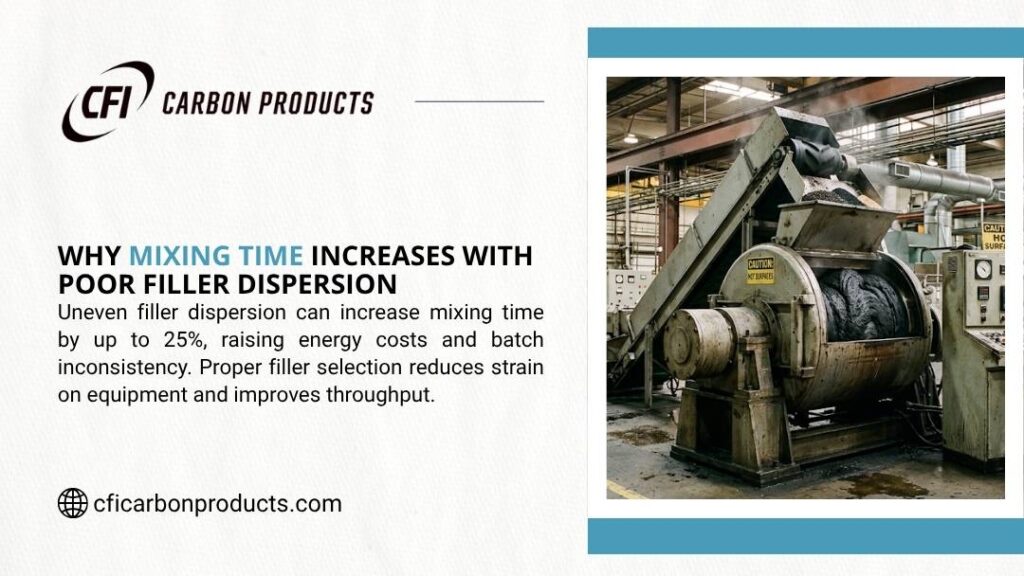
This is where things tend to get overlooked, at least early on. On paper, most fillers look fine. The data checks out. Reinforcement levels look solid. Cost seems reasonable. But once the material hits the mixer, that’s when reality sets in.
In a lot of cases, issues don’t show up immediately. They start small, slightly uneven dispersion, a bit more energy required during mixing, maybe a minor inconsistency between batches. Then over time, those small things stack up.
Compatibility determines how well the filler actually integrates with the rubber matrix. Not just chemically, but physically, how it spreads, how it bonds, how it behaves under shear.
If a filler resists dispersion, you’ll usually see it in mixing time first. Operators compensate. Then it shows up in surface finish. And eventually, it affects performance. It’s rarely a single failure point; it’s more of a gradual decline.
That’s why compatibility isn’t just a lab metric. It’s a production issue. Manufacturers often run multiple trials to get this right. Access to formulation testing and lab support helps reduce guesswork, especially when working with unfamiliar materials.
Another factor that doesn’t get talked about enough is flow behavior. Some fillers actually improve how the compound moves during processing. You’ll notice it in extrusion stability or mold filling, things that don’t always show up in standard data sheets.
And this is where lower-density, engineered fillers start to stand out. Because they don’t just sit in the compound, they tend to distribute more evenly, which can reduce mixing effort and improve consistency across runs.
Processing behavior also plays a role. Fillers that improve flowability tend to reduce cycle times, which can make a noticeable difference in overall efficiency. In practical terms, better compatibility usually means fewer adjustments on the production floor, and that alone can justify a material change.
How to Choose the Right High-Performance Rubber Filler?
The right filler depends on what the product needs to achieve and how it will be manufactured. Some applications require maximum strength, while others prioritize weight reduction or cost efficiency.
| Category | Best Choice |
| Reinforcing Fillers (High Performance) | Carbon black, engineered carbon |
| Specialty/Functional Fillers | Silica, hybrid systems |
| Cost-Effective Fillers | Clay, calcium carbonate |
Often, the decision comes down to trade-offs. A slightly more expensive material might reduce processing time or improve consistency, which offsets the initial cost.
Sustainability Shift in Rubber Fillers
The conversation around fillers has changed over the last few years. What used to be a side discussion, mostly compliance-driven, is now sitting right at the center of material selection. In many cases, it’s not even optional anymore. Procurement teams are asking about emissions before performance gets discussed.
It’s no longer just about performance. Environmental impact has become part of the equation. Manufacturers are being pushed to reduce emissions and rethink how materials are sourced and processed.
According to the International Energy Agency, industrial production remains a major contributor to global emissions. That has led to increased interest in alternative materials.
What’s interesting, though, is how the industry is responding. Instead of replacing systems entirely, most manufacturers are looking for drop-in improvements, materials that improve sustainability without forcing a complete reformulation.
According to the studies, decarbonizing materials like carbon black is critical, as they are deeply embedded in industrial supply chains. That’s exactly where newer carbon-based fillers are gaining traction. They don’t require manufacturers to start from scratch. Instead, they offer incremental gains, lower emissions, reduced density, and in some cases, better processability.
Options like low-emission carbon-based fillers are gaining attention because they offer a way to reduce impact without completely redesigning existing formulations.
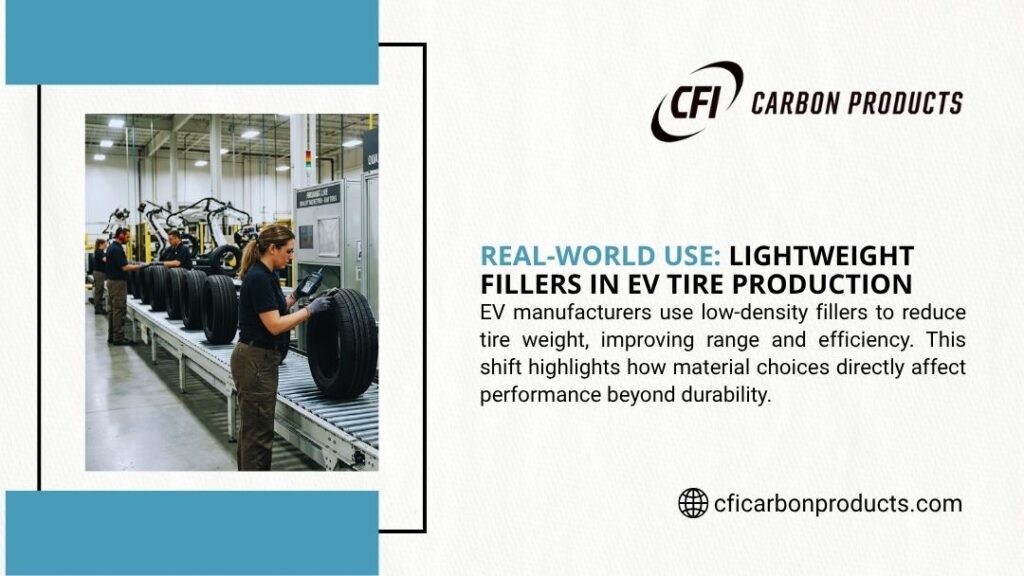
And here’s something that often gets overlooked: lighter fillers don’t just reduce environmental impact. They can also reduce material usage per part. That has a direct effect on both sustainability metrics and cost efficiency. This shift isn’t happening overnight, but it’s definitely underway.
Cost vs Performance Trade-Offs
Every manufacturer faces the same dilemma: reduce cost without compromising quality. Traditional fillers like carbon black provide strong reinforcement but may increase overall weight and cost. Silica filler offers performance benefits but requires higher investment and complex processing.
Modern alternatives focus on value per volume rather than cost per weight. This shift allows manufacturers to optimize formulations without sacrificing performance.
| Factor | Traditional Fillers | Modern Alternatives |
| Cost per kg | Lower | Slightly higher |
| Cost per volume | Higher | Lower |
| Processing efficiency | Moderate | Improved |
| Sustainability | Limited | Enhanced |
Understanding this trade-off is key to selecting the right filler.
Applications Across Industries
Different industries approach fillers differently because their requirements aren’t the same.
| Industry | Application | Key Requirement |
| Automotive | Tires, seals | Durability |
| Construction | Roofing materials | Weather resistance |
| Industrial | Conveyor belts | Abrasion resistance |
| Plastics | Hybrid materials | Compatibility |
| Coatings | Protective layers | Stability |
For instance, materials used in tire rubber systems need to balance strength and flexibility, while construction materials focus more on environmental resistance.
How to Improve Rubber Tensile Strength with Fillers
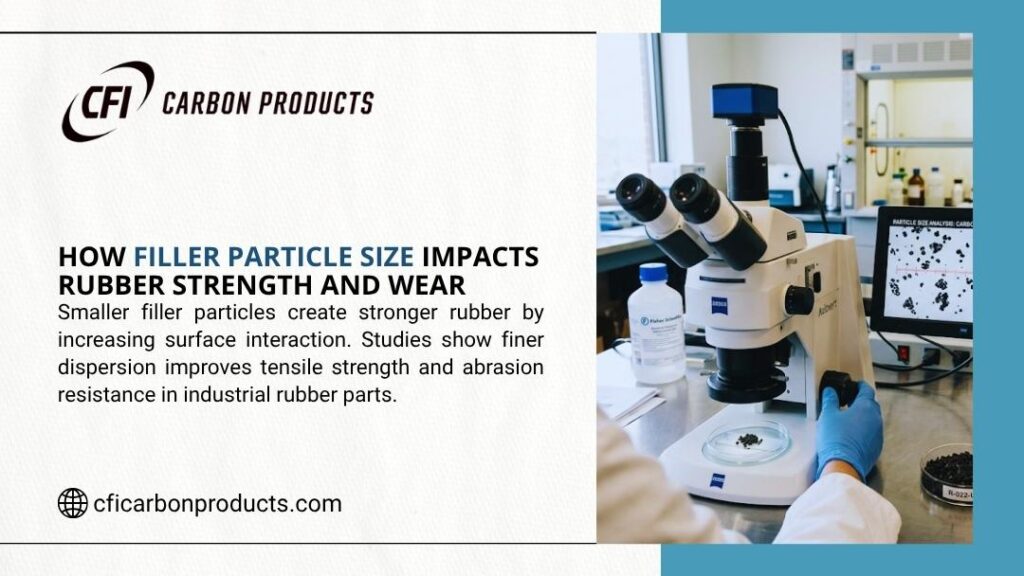
Improving tensile strength takes more than just increasing filler content. Particle size matters. Smaller particles create more interaction with the rubber matrix, which improves reinforcement. Dispersion matters just as much. If the filler isn’t evenly distributed, the compound develops weak points.
Blending fillers can also help. Combining different materials allows manufacturers to fine-tune performance without overloading the compound. In most cases, achieving the right balance involves testing and adjustment rather than a single formula.
Future Trends in High-Performance Rubber Fillers
The direction is fairly clear. Manufacturers are moving toward materials that offer more than just reinforcement. They want fillers that improve processing, reduce weight, and lower environmental impact.
Recycled carbon, hybrid fillers, and engineered materials are becoming more common. At the same time, digital tools are helping engineers predict how fillers will behave before production even begins.
The demand for high-performance rubber fillers isn’t slowing down. If anything, it’s becoming more specific, more tailored to individual applications.
FAQs About Rubber Fillers
What is the strongest synthetic rubber?
It depends on the application, but nitrile and EPDM are often considered among the strongest.
Which is better, silicone or rubber?
Silicone handles extreme temperatures better, while rubber provides higher mechanical strength.
How to increase the tensile strength of rubber?
Use reinforcing fillers, improve dispersion, and optimize the compound.
What is the most expensive type of rubber?
Fluorocarbons and specialty elastomers tend to be the most expensive.
Why is carbon black used in rubber?
Because it improves durability, strength, and resistance to wear.
Are there eco-friendly rubber fillers?
Yes, newer carbon-based and recycled materials are designed for lower environmental impact.
What This Means for Manufacturers
Material choices have long-term consequences. The right filler can improve performance, reduce waste, and simplify production. The wrong one can do the opposite.
But in real manufacturing settings, decisions rarely come down to just better vs worse. They come down to trade-offs, cost vs performance, weight vs durability, efficiency vs consistency.
What we’ve seen across the industry is that small formulation changes, especially in filler selection, often lead to outsized results. A slight reduction in density, for example, can improve throughput, reduce compound weight, and lower transportation costs at the same time.
Manufacturers exploring better options often look toward performance-focused carbon solutions like those available through advanced filler technologies.
CFI’s approach is built around that exact idea, not replacing what already works, but improving it. Materials like Austin Black are designed to integrate into existing systems while improving processability, reducing weight, and supporting sustainability targets.
So instead of asking which filler is best, a more useful question might be: Where can we improve efficiency without disrupting production? If that question matters in your operation, it’s worth taking a closer look at how your current filler system is performing, and where it might be leaving value on the table.